
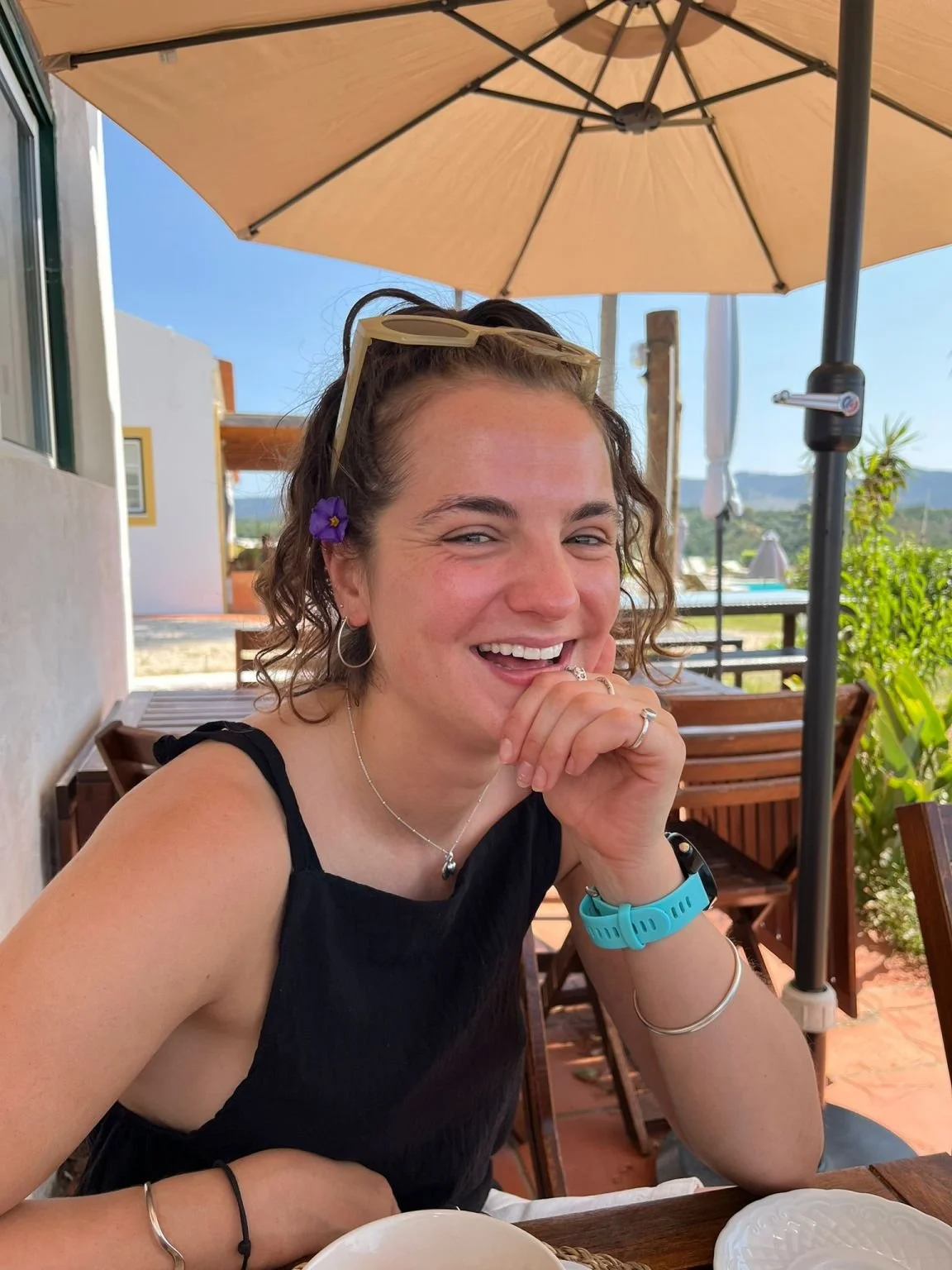
Ellie Ashton-Melia is a sustainability consultant specialising in the events industry and founder of NotAllGreen. She was part of the first cohort of the CAA's ISEP-certified carbon accounting training course. We sat down with Ellie to hear what the course has enabled her to do.
Emilien: Tell us a bit about your background and what led you to the course.
Ellie: I'd just left my previous role as Membership Director at isla, the event sustainability body, and set up my own consultancy. At isla I worked across the entire event supply chain, helping venues, agencies and suppliers with sustainability strategies. We also developed a carbon measurement platform for event footprints, so that's where my carbon knowledge originally came from.
When I went out on my own, I did a skills analysis and realised the biggest gap was around carbon accounting for business operations. I understood event footprints from an operational standpoint, and I knew what Scopes 1, 2 and 3 were, but the technicalities of doing it for a business? That was something I needed to strengthen.
Emilien: So, the course came along at the right time?
Ellie: It really did. I saw it come through from the CAA just before Christmas, and I read through the content and thought, this actually hits exactly all the things I want to learn. I'd already written myself a plan to self-teach over two or three months, but I thought, I can compress that time by doing this instead.
I'll be honest, as someone who'd just gone self-employed, it was a big investment. But it's definitely been worth every penny.
Emilien: What has the course enabled you to do that you couldn't before?
Ellie: Off the back of it, I've already secured two projects I wouldn't have felt confident pitching for before.
The first is a carbon impact report for a large exhibition venue. When they sent over their data, I was able to glance over it and within half an hour identify the gaps, where the data quality wasn't strong enough, what was missing, and what needed to improve for 2026. Before the course, I would have spent a long time researching just to get to that point.
The second is a pitch for a full business operations carbon reporting project across five global offices, both in the EU and outside. They need comprehensive Scopes 1, 2 and 3, a materiality assessment, and they want to align with CSRD or ISSB. This is a global events business, so the Scope 3 side is incredibly complex because your supply chain changes with every event.
I wouldn't have even dreamt of pitching for something like that before. It would have taken me a long time to get to a point where I felt comfortable. But after the course, I knew I could do this.
Emilien: How has it changed what you can offer clients?
Ellie: It means I can do the full service now. Before, I could do strategy, and if someone gave me the data and graphs, I could tell a story out of it. But now I can get into the numbers myself. I can assess data quality, understand whether something is an estimation or an assumption, question whether a methodology is GHG Protocol-aligned, and bring in the frameworks like SBTi and ISSB.
That's the difference. I've gone from strategy and communications to being able to do the data work that informs the strategy. It's the holistic offering.
Emilien: You come from a creative background. How did you find a technical course like this?
Ellie: I was a bit intimidated at first, if I'm honest. A lot of people in my cohort do this day in, day out. They're data analysts or they run corporate reporting for huge businesses. And I'm coming from a comms and events background.
But actually, the diversity was one of the best things about it. We all brought different things to the group. And the way the course was delivered meant it compounded. You sit five days in front of a screen and you think by day five you won't remember day one, but that wasn't true at all. When I did the exam, I could answer the questions. I must have learned something.
Emilien: What's your approach now with the clients you work with?
Ellie: Because I understand it now, I can communicate it and teach others. My view is that I want to build capability within the organisations I work with, not just come in, write a report and leave. If you break carbon accounting down into clear steps, it's not as complex as people think.
For example, the client I'm writing the impact report for, a previous consultant had taken their data and just made it work for the report. But some of that data shouldn't have been included without flagging its limitations. The report I'll write now is going to highlight the measurement gaps rather than just say look how well you've done. It's the opposite. It's about saying, here's where we can really tighten the ship.
Emilien: Why does that matter?
Ellie: If environmental reporting is going to sit within annual reports, it has to be credible. I would never dream of saying to my financial accountant, just throw some numbers in a spreadsheet and off you go. You could get fined for that. Why should it be any different for carbon accounts?
You can see good data from bad data almost instantly now. And I think that's important.
Ellie Ashton-Melia is the founder of NotAllGreen and is currently pursuing a degree in sustainable development alongside her consultancy work. She was part of the first cohort of the CAA's ISEP-certified carbon accounting training course.
Interested in the course? Find out more here.